Inteligencia artificial (IA)
J.S. Held adquiere Element Forensic Engineering, ampliando así sus capacidades especializadas en seguros para reclamos de daños a la propiedad en el segmento de empresas medianas y de grandes en todo Canadá
LEER MÁSWhen AI infrastructure failures, delays, or disruptions occur, the resulting impacts can cross technical and financial boundaries. J.S. Held helps clients understand what happened, how the impacts spread, and the associated damages in insurance claims and legal disputes, providing a single-source solution that combines deep, courtroom-tested technical and financial expertise.
The global AI hyperscale data center build-out is one of the largest infrastructure investment cycles in modern history. Its scale, concentration of value, and dependence on interconnected construction, energy, environmental, equipment, digital, and operational systems are creating technically complex claims and disputes with potentially significant financial exposure. With a dispute profile spanning multiple layers - from the physical infrastructure through the operational environment to the technology stack - no single-discipline firm can address the full scope. J.S. Held is uniquely positioned to deliver integrated expertise across all dimensions.
AI infrastructure insurance claims and legal disputes involve an interconnected combination of environmental conditions, construction activities, specialized equipment, energy systems, digital operations, intellectual property considerations, and financial consequences. These matters are further complicated by the pace of AI infrastructure development, which is intensifying demand for AI GPUs (chips), power, water, materials, specialized equipment, qualified contractors, and other constrained resources.
A disruption in one area can affect project delivery, facility performance, business continuity, and financial exposure across the broader infrastructure environment. J.S. Held examines the relevant physical, environmental, technical, project, digital, operational, and financial evidence to establish the facts and connect related impacts.
Through one integrated team that analyzes the event from distinct technical and financial perspectives, J.S. Held helps counsel, insurance professionals, owners, operators, developers, contractors, utilities, investors, and other stakeholders determine causation, assess claimed impacts, quantify property and financial exposure, and present independent findings that can withstand scrutiny in claims and dispute-resolution proceedings.
This multidisciplinary analysis gives clients a clearer, evidence-based foundation for evaluating and resolving high-stakes insurance claims, litigation, arbitration, and other disputes.
AI Infrastructure: Data Centers and Beyond
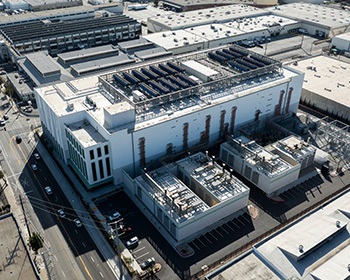
AI infrastructure encompasses the facilities, utilities, energy generation and distribution systems, cooling technologies, computing equipment, semiconductor supply chains, construction programs, and surrounding environmental conditions required to support AI operations.
Rapid build-out can place additional pressure on energy availability, utility interconnection, material and equipment procurement, contractor capacity, project schedules, and costs. When a failure, delay, environmental issue, power constraint, construction problem, or operational disruption occurs, the consequences may extend across multiple assets, contractual relationships, and project stakeholders rather than remaining confined to a single system or discipline.
AI Infrastructure at a Glance
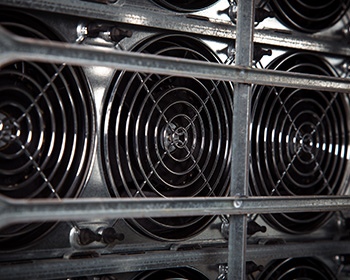
945 TWh by 2030
Global electricity demand from data centers is projected to more than double by 2030, with AI as the largest driver of the increase.Source: International Energy Agency: Energy and AI
6.7% to 12% by 2028
Data centers could account for 6.7% to 12% of total US electricity consumption by 2028.Sources: U.S. Department of Energy report summary and Lawrence Berkeley National Laboratory findings
7% to more than 30%
Cooling and environmental control can account for approximately 7% to more than 30% of a data center’s electricity consumption, depending on facility type and efficiency.Source: International Energy Agency: Energy Demand from AI
9.3 trillion liters by 2030
Global data center water consumption is projected to reach 9.3 trillion liters by 2030.Source: Reuters coverage of United Nations University research

J.S. Held combines construction, engineering, equipment, environmental, intellectual property, forensic accounting, economic damages, digital investigations, and complex claims and disputes expertise to deliver a single-source solution that addresses:
Investigating equipment failures, cooling events, construction defects, power disruptions, environmental issues, contamination incidents, cyber-related events, and operational issues to determine the cause and origin of a failure, delay, or disruption.
Tracing how a failure, delay, outage, or disruption affected connected assets, activities, and systems and determining the extent of associated impacts.
Measuring the financial impact – business interruption, delay in start-up, extra expense, lost profits, economic damages, contractual liabilities, and other financial consequences – resulting from the underlying event.
Combining five decades of testimony across state, federal, and international courts and arbitration venues on six continents to provide independent technical and financial analysis in litigation, arbitration, mediation, and other legal proceedings.
Construction Claims and Dispute Analysis
Financial Disputes and Damages Quantification


An AI infrastructure dispute is a claim or contested matter involving the facilities, equipment, power, cooling, construction, digital systems, or financial impacts associated with AI computing operations. These matters may arise from physical damage, equipment failure, contamination, temperature excursions, power disruption, construction delay, operational interruption, or disagreements over restoration and replacement, among other incidents. The defining characteristic is not simply the presence of AI hardware. It is the interaction among the systems required to construct, power, cool, connect, and operate the computing environment.
AI infrastructure disputes can arise from fire, water, contamination, humidity, power outages, power surges, temperature excursions, battery energy storage system events, natural hazards, transit damage, construction error, equipment failure, or project delay. A dispute may concern causation, liability, the extent of physical damage, repairability, replacement value, associated delays and disruptions, and the quantification of financial impacts. The relevant issues depend on the event, contracts, insurance coverage, and available evidence.
AI-focused facilities combine highly configurable computing equipment, greater rack power density, specialized cooling, significant electrical demand, and supporting infrastructure that must operate as an integrated system. A cooling or power event can therefore affect equipment condition and operations at the same time, while a construction or procurement problem may delay commissioning or the planned start of service and result in financial losses and knock-on effects. These dependencies require technical and financial questions to be evaluated together rather than through unrelated analyses.
J.S. Held experts understand how these systems are designed, constructed, operated, maintained, and interconnected, enabling us to identify the factors that contribute to delays, failures, performance issues, disruptions, and outages, and to quantify the associated financial impacts for insurance claims and legal disputes.
AI infrastructure insurance claims and legal disputes involve an interconnected combination of environmental conditions, construction activities, specialized equipment, energy systems, digital operations, intellectual property considerations, and financial impacts spanning multiple layers – from the physical infrastructure through the operational environment to the technology stack.
A disruption in one area can affect project delivery, facility performance, business continuity, and financial exposure across the broader infrastructure environment. J.S. Held examines the relevant physical, environmental, technical, project, digital, operational, and financial evidence to establish the facts and connect related impacts.
Through one integrated team that analyzes the event from distinct technical and financial perspectives, J.S. Held helps counsel, insurance professionals, owners, operators, developers, contractors, utilities, investors, and other stakeholders assess causation, test claimed impacts, quantify financial exposure, and present independent findings that can withstand scrutiny in claims and dispute-resolution proceedings.
This multidisciplinary analysis gives clients a clearer, evidence-based foundation for evaluating and resolving high-stakes insurance claims, litigation, arbitration, and other disputes.
J.S. Held combines deep technical and financial expertise to investigate the cause and origin of AI infrastructure failures, delays, and disruptions; evaluate impacts across interconnected infrastructure layers - from the physical infrastructure through the operational environment to the technology stack; and quantify business interruption, delays, extra expense, lost profits, economic damages, contractual liabilities, and other financial consequences. The firm delivers independent analysis, expert reports, and testimony in litigation, arbitration, mediation, and other dispute-resolution proceedings.
Still have questions?