Sistemas de techos comerciales: materiales, vida útil y estrategias de ingeniería para el rendimiento de los techos de baja pendiente
J.S. Held fortalece su experiencia en contabilidad forense para litigios matrimoniales y comerciales con la adquisición de Forensic Accountants & Consultants.
Los propietarios de edificios comerciales/industriales, los gestores de activos, los aseguradores y los líderes de instalaciones responsables de la planificación del capital y la mitigación de riesgos, así como los arquitectos, los contratistas de sistemas de techos, los consultores, los ajustadores y los inversores en bienes raíces que evalúan las condiciones, el rendimiento y la estrategia de colocación de los techos, deberían leer este artículo para saber más acerca de lo siguiente:
Por qué un techo debe considerarse un activo diseñado y gestionado, y no un producto básico.
Cómo la mayoría de las pérdidas catastróficas siguen siendo predecibles y evitables.
Por qué la selección de materiales debe alinearse con la exposición, no con las tendencias.
Cómo el diseño eólico y del drenaje conforme a los códigos influye en los seguros y los resultados del ciclo de vida.
Cómo la restauración, el aseguramiento y el control de la calidad (QA/QC) y el mantenimiento basado en datos permiten optimizar la eficiencia del capital.
Voces expertas
Michelle Feduccia Michelle recurre a su experiencia en ingeniería forense para analizar cómo el código de construcción, el diseño del sistema de drenaje, el levantamiento por viento y los detalles de las uniones influyen en los modos de falla que se destacan en este artículo, vinculando los requisitos establecidos por los códigos con estrategias prácticas para prevenir pérdidas previsibles en sistemas de techos comerciales.
Dan Parker Dan aplica sus conocimientos en análisis forense y evaluación de daños al análisis que se hace en el artículo sobre los mecanismos de falla, el diseño basado en códigos y los ensamblajes resilientes. Estudia el rendimiento de materiales y los patrones de pérdidas reales para aclarar por qué los sistemas de techos modernos fallan.
Resumen ejecutivo
Los sistemas de techos comerciales en 2026 se definen por un conjunto de presiones que se entrecruzan: códigos de energía más estrictos, aumento de la volatilidad climática, restricciones de mano de obra, la expansión de los bienes raíces industriales, y expectativas de los propietarios en cuanto a durabilidad y sostenibilidad. Al mismo tiempo, los avances en la composición química de las membranas, la tecnología de fijación y las herramientas de inspección digital están transformando la forma en que se diseñan, construyen y gestionan los techos.
Sin embargo, a pesar de los avances, la mayoría de las pérdidas siguen debiéndose a las mismas causas fundamentales: sistemas susceptibles al granizo, fallas en el drenaje, bordes y esquinas vulnerables al viento, detalles deficientes en los tapajuntas y mantenimiento pospuesto. A medida que cada vez más propietarios consideran el techo como un activo energético —al albergar paneles solares, regular la temperatura y recoger aguas pluviales—, las consecuencias de un diseño inadecuado son más graves que nunca.
Este artículo ofrece un análisis técnico profundo de las tendencias actuales en materiales, mecanismos de fallas, mejores prácticas de ingeniería y evolución de las fuerzas del mercado que dan forma a los techos comerciales modernos.
Tendencias en los materiales de los sistemas de techos comerciales y los sistemas de techos energéticamente eficientes
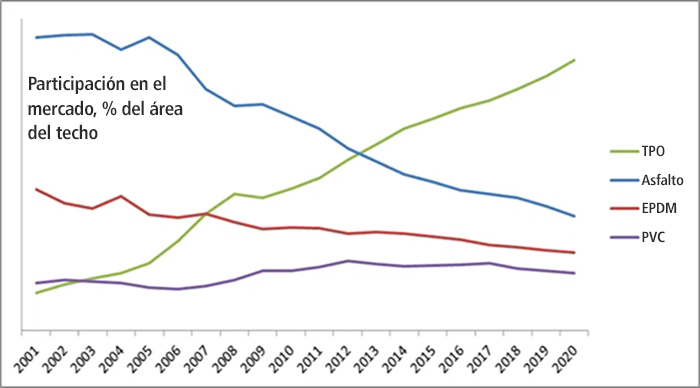
Los sistemas de techos de TPO y PVC dominan los sistemas de techos comerciales de baja pendiente
En el mercado estadounidense de los techos de baja pendiente, las membranas de una sola capa han pasado de ser una "opción popular" a convertirse en el estándar predominante. La poliolefina termoplástica (TPO), en particular, representa actualmente más de la mitad de las nuevas instalaciones comerciales en techos de baja pendiente, gracias a una combinación de:
Instalación rápida en grandes centros de distribución e instalaciones de logística.
Uniones soldadas en caliente que proporcionan una resistencia sólida y uniforme en las juntas.
Alta reflexión lo que favorece el "techo frío" y el cumplimiento del código de energía.
Costo competitivo en comparación con los sistemas de betún modificados de múltiples capas.
El policloruro de vinilo (PVC) sigue siendo una opción muy utilizada, especialmente en entornos de procesamiento de alimentos, fabricación y restauración, donde la exposición a sustancias químicas (aceites, grasas y lubricantes) exige una membrana diseñada para resistir a dichos productos químicos.
Sistemas de techos con cubiertas metálicas corrugadas para una larga vida útil y techos comerciales preparados para la energía solar
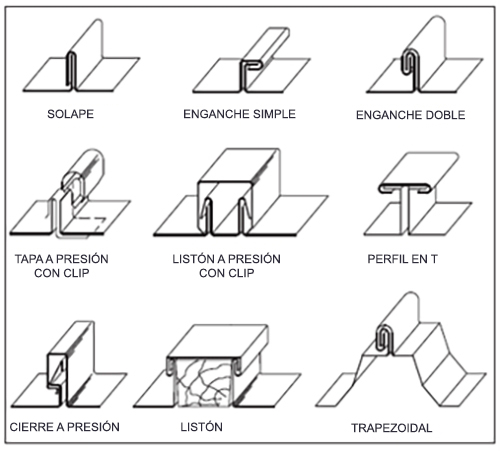
Los sistemas de techos con cubiertas metálicas están despertando un renovado interés, especialmente en grandes superficies, instalaciones ocupadas por sus propietarios y sectores industriales con estrategias de inversión a largo plazo. Su larga vida útil, sus mínimas necesidades de mantenimiento y su compatibilidad con la energía solar —gracias a los sistemas de montaje con abrazaderas que evitan perforar la membrana— los hacen cada vez más atractivos.
Los propietarios que planean instalar PVC suelen considerar el metal como una estructura con una vida útil de 40 años, capaz de soportar varios ciclos de vida de los paneles solares sin necesidad de interrumpir el funcionamiento para renovar el techo.
Figura 2 - Perfiles de cubiertas corrugadas (Fuente: National Roofing Contractors Association - Roofing Manual: Metal Panel and SPF Roof Systems).
Sistemas de techos comerciales sostenibles con sistemas verdes y de "techo azul"
Impulsados por programas medioambientales, sociales y de gobernanza (ESG), los requisitos de gestión del agua y las preocupaciones relacionadas con el calor urbano, los techos verdes (sistemas con vegetación) y los "techos azules" (techos de retención de agua) son cada vez más habituales en los entornos urbanos. Estos ensamblajes requieren controles más estrictos en cuanto a lo siguiente:
Carga estructural.
Integridad de la barrera antirraíces.
Estrategia de drenaje y capacidad de rebosadero.
Compatibilidad con el tipo de membrana.
A medida que los propietarios de edificios buscan obtener créditos de Liderazgo en Energía y Diseño Ambiental (LEED) o incentivos municipales para la gestión de aguas pluviales, los ensamblajes de techos desempeñan cada vez más roles multifuncionales que van más allá de la protección contra las inclemencias del tiempo.
Extensión de la vida útil de los techos comerciales con recubrimientos y restauración
Las grandes carteras corporativas, especialmente almacenes, polígonos industriales y cadenas minoristas, están recurriendo a sistemas de recubrimiento para prolongar los ciclos de vida entre 10 y 20 años, a una fracción del costo de reemplazo. Los recubrimientos de silicona y estireno-etilbutileno-estireno (SEBS) dominan los entornos de alta formación de charcos, mientras que los sistemas de acrílico y uretano funcionan bien en techos con pendiente o con drenaje positivo.
La restauración ahora es vista como una herramienta de gestión de activos básica más que como una medida temporal.
Materiales para sistemas de techos comerciales y selección del sistema para techos de baja pendiente
Seleccionar el "mejor techo" requiere alinear el comportamiento de los materiales con los códigos de construcción, el clima, la exposición al riesgo, el tipo de ocupación y la estrategia de mantenimiento a largo plazo. Cada sistema presenta consideraciones de ingeniería diferentes.
La alta reflexión reduce las cargas de refrigeración.
Las uniones soldables en caliente proporcionan juntas monolíticas fuertes.
Costo instalado competitivo.
En general, es fácil identificar los problemas para su mantenimiento.
Aspectos que se deben considerar
El rendimiento varía según la formulación y el espesor.
Las capas más gruesas (80-90 mil) mejoran significativamente la resistencia a las perforaciones y a los rayos UV.
Más sensible a la ventana de soldadura en caliente que el PVC, lo que aumenta los requisitos de aseguramiento de la calidad.
PVC y PVC-KEE
Fortalezas
Resistencia química superior en entornos de exposición a alimentos, industriales y de restauración.
Uniones soldadas con amplia tolerancia a la ventana de calor.
Excelente flexibilidad y resistencia al fuego.
En general, es fácil identificar los problemas para su mantenimiento.
Aspectos que se deben considerar
Mayor costo de materiales.
Preocupaciones sobre la migración de plastificantes en formulaciones que no contienen KEE a lo largo de una vida útil prolongada.
Monómero de etileno-propileno-dieno (EPDM)
Fortalezas
Larga vida útil con un excelente rendimiento en climas fríos.
Alta resistencia al granizo debido a las opciones de elasticidad y espesor.
Las hojas grandes reducen la cantidad de uniones.
Aspectos que se deben considerar
Las uniones se realizan con cinta y adhesivo en lugar de soldadura.
Requiere una preparación meticulosa de la superficie.
Es un poco más difícil identificar los problemas para su mantenimiento.
Sistemas de techos de betún modificado (Mod-Bit)/multimembrana (BUR)
Fortalezas
La redundancia de varias capas mejora la resistencia a las perforaciones.
Durabilidad probada cuando se instala con el detalle adecuado.
Excelente elección para penetraciones complejas o techos de alto tránsito.
Aspectos que se deben considerar
La instalación requiere mucha mano de obra.
Los sistemas aplicados con soplete requieren controles de seguridad estrictos.
Es difícil identificar los problemas para su mantenimiento.
Cubiertas metálicas corrugadas.
Fortalezas
Vida útil prolongada (más de 40 años).
Los sujetadores ocultos reducen los riesgos de fugas.
La plataforma más adecuada para instalaciones fotovoltaicas sin penetraciones.
En general, es fácil identificar los problemas para su mantenimiento.
Aspectos que se deben considerar
Requiere detalles de movimiento térmico diseñados específicamente.
No es ideal para techos con numerosas penetraciones.
Riesgos y prevención de fallas en techos comerciales
Drenaje positivo de techos y prevención de formación de charcos
La causa más habitual de pérdidas, las fallas en el drenaje, se debe a una pendiente inadecuada, a desagües obstruidos, a la deformación de la cubierta o a la instalación de unidades mecánicas que se agregan tras la construcción. La falta de drenaje positivo o de pendiente adecuada (según la definición del Código de Construcción Internacional) puede causar la formación de charcos. El agua estancada acelera el envejecimiento de la membrana, favorece el crecimiento de algas y suma una carga estructural considerable, ya que cada pulgada adicional de agua supone más de 5 libras por pie cuadrado de peso.
IBC 2024 - Sección 1502 (Definiciones) Drenaje positivo de techos
El drenaje positivo del techo tiene en cuenta la deformación de la cubierta bajo carga y proporciona una pendiente suficiente para que el agua drene en un plazo de 48 horas tras la precipitación (IBC 2024 §1502).
IBC 2024 - Sección 1507.10.1 Pendiente
Los sistemas de techos multimembrana requieren una pendiente de diseño mínima de 1/4:12 (2 %) para el drenaje; los sistemas de techos multimembrana de alquitrán de hulla se permiten con una pendiente mínima de 1/8:12 (1 %) (IBC 2024 §1507.10.1).
IBC 2024 - Sección 1502.2 1502.2 Desagües secundarios (rebosadero de emergencia) o salidas de agua
Cuando se requieran desagües en el techo y la construcción del perímetro de este pueda retener agua por encima de la superficie del techo, se exigirá la instalación de desagües secundarios (rebosadero de emergencia) o salidas de agua, que deberán dimensionarse e instalarse de conformidad con el Código Internacional de Construcción (IBC 2024 §1611) y el Código Internacional de Plomería (IBC 2024 §1502, 2).
La formación de charcos también afecta a muchas composiciones químicas de los recubrimientos. La silicona y el SEBS por lo general toleran la formación de charcos; los acrílicos tienden a fallar de manera prematura si permanecen sumergidos durante mucho tiempo.
IBC 2024 - Sección 1611.2 (Inestabilidad por formación de charcos) requiere evaluar la inestabilidad por formación de charcos cuando el drenaje o la pendiente son insuficientes.
Riesgos de levantamiento por vientos y protección de bordes de los techos comerciales
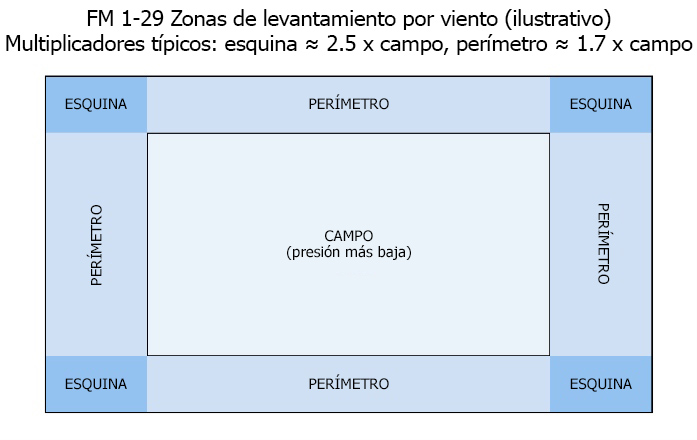
El viento rara vez desprende la parte central de un techo; las fallas suelen originarse en el perímetro o en las esquinas, donde las presiones de levantamiento pueden ser 2-3 veces mayores que en el centro (IBC 2024 §1504, 1; Capítulo 16, cargas de viento según ASCE 7-22).
Las directrices de la norma FM 1-29 exigen ahora valores de diseño diferenciados según las zonas. Un techo diseñado para soportar una fuerza de levantamiento de 45 libras por pie cuadrado, por ejemplo, podría requerir:
Campo: Clase 90.
Perímetro: Clase 150.
Esquinas: Clase 225.
El diseño inadecuado de estas zonas es una de las principales causas de pérdidas catastróficas tras los huracanes y los fenómenos de vientos fuertes. Los códigos intentan reducir este daño, pero ningún techo es inmune al viento.
Figura 4 - FM-129 Zonas de levantamiento por viento (Fuente: J.S. Held, LLC).
Riesgos de penetración y filtraciones en las estrategias de mantenimiento
Las uniones siguen siendo el punto más débil de la mayoría de los techos comerciales. Los problemas comunes incluyen:
Vierteaguas de tuberías de tamaño insuficiente o mal instalados.
Tapajuntas de soportes de sistemas de HVAC con soldaduras deficientes.
El contratapajuntas no termina a la altura adecuada.
Las barras de terminación no están selladas ni sujetadas adecuadamente.
Selladores incompatibles que interactúan con la composición química de la membrana.
Incluso la mejor membrana falla si las uniones no están diseñadas e instaladas correctamente.
Extender la vida útil de los techos comerciales mediante el mantenimiento preventivo y las inspecciones
Todas las membranas se deterioran con el tiempo, pero gran parte del daño de los primeros años puede evitarse. Las inspecciones periódicas, las pequeñas reparaciones oportunas, la limpieza de desagües y el mantenimiento preventivo pueden prolongar la vida útil del sistema.
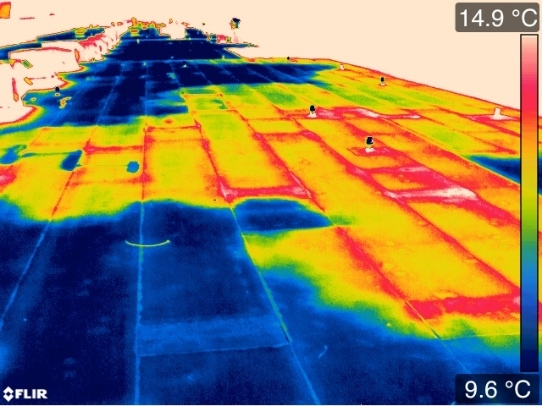
El escaneo infrarrojo (IR), los reconocimientos con drones y los mapeos de humedad son elementos cada vez más esenciales de un programa de mantenimiento moderno.
Figura 5 - Escaneo térmico de techo (Fuente: Imagen de archivo).
Diseño de sistemas de techos comerciales de baja pendiente para optimizar el comportamiento frente al viento, el drenaje y el rendimiento térmico
Un techo de alto rendimiento comienza mucho antes de la instalación, en la fase de diseño, donde convergen la física, el clima y la seguridad.
Diseño resistente al viento y fijación
El diseño de ingeniería por lo general comienza con el viento. Usando el código de construcción, ASCE 7 y FM 128 (diseño eólico) y FM 129 (fijación), los diseñadores calculan las presiones para las zonas del centro, el perímetro y las esquinas. Los bordes de metal deben cumplir con la norma FM 149. Cuando se utilicen pruebas de levantamiento de zonas centrales según la norma FM 152, los diseñadores deben conocer las limitaciones y la variabilidad de dichas pruebas.
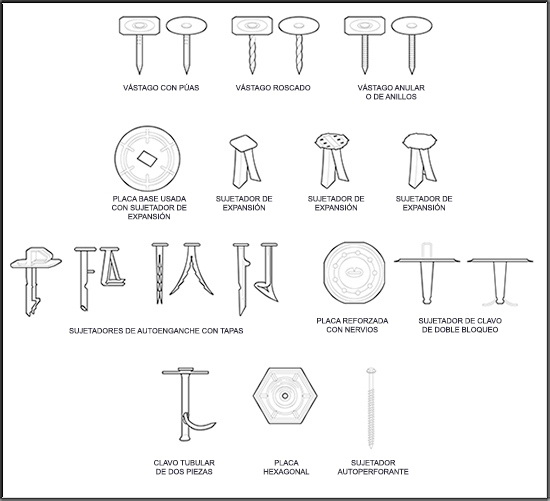
Figura 6 - Sujetadores y placas de hojas de base (Fuente: National Roofing Contractors Association - Roofing Manual: Membrane Roof Systems).
Consideraciones sobre la expansión térmica
Los sistemas metálicos y termoplásticos están sometidos a ciclos térmicos importantes. Los clips, los sujetadores y las juntas de expansión deben permitir un movimiento predecible; de lo contrario, el techo sufrirá deformaciones, ondulaciones o fallas por tensión en las juntas.
Gestión de la humedad y del vapor
A medida que los valores R de aislamiento aumentan, también aumenta el riesgo de humedad atrapada. El modelado del punto de rocío garantiza que el ensamblaje evite la condensación intersticial. La elección del retardador de vapor depende de lo siguiente:
Clase de humedad interior.
Permeabilidad de la cubierta.
Zona climática.
Tipo de ocupación (atención médica, piscinas, almacenamiento en frío).
Estrategias de aislamiento de techos comerciales
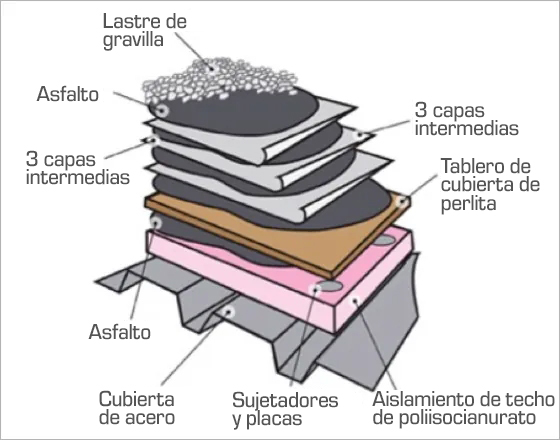
La mayoría de los techos comerciales utilizan aislamiento de poliisocianurato debido a su alto valor R por pulgada y a su bajo peso. Una configuración de juntas escalonadas de doble capa reduce los puentes térmicos y minimiza el efecto de relieve de los sujetadores.
Drenaje positivo
Código Internacional de Construcción, Construcción: DRENAJE POSITIVO DE TECHOS. Condición de drenaje en la que se han tenido en cuenta todas las deformaciones por carga de la cubierta del techo y se ha previsto una pendiente suficiente para garantizar el drenaje del techo en un plazo de 48 horas tras la precipitación.
Es fundamental diseñar con una pendiente mínima de ¼ pulg./pie. El modelado de la deformación a largo plazo de la cubierta —especialmente en sistemas de vigas de barra— evita la futura formación de charcos. Los desagües secundarios o salidas de agua de rebosadero proporcionan protección crítica durante precipitaciones extremas.
Asegurar una instalación de calidad en sistemas de techos comerciales de baja pendiente
Incluso el mejor diseño falla sin una instalación de calidad. La escasez de mano de obra acentúa la variabilidad, lo que hace que el aseguramiento y el control de la calidad sean esenciales.
Maquetas previas a la construcción y secuencia de instalación
Las maquetas previas a la construcción de uniones, tapajuntas y los bordes de metal marcan la pauta en materia de calidad. La secuencia importa: la fijación en el perímetro y las esquinas debe instalarse con antelación y verificarse antes de continuar con el trabajo en el centro.
Protección de la integridad del sustrato y control de la humedad
El aislamiento mojado o las cubiertas húmedas, si quedan atrapados bajo una membrana, provocan la formación de ampollas, moho y una menor adherencia. Los proyectos que tienen éxito protegen rigurosamente los materiales de las inclemencias del tiempo.
Tecnologías de inspección no destructiva
Las tecnologías como la detección electrónica de fugas (ELD), el escaneo infrarrojo (IR) y las pruebas con sondas de las soldaduras son herramientas estándar para validar la calidad de la instalación.
Mantenimiento proactivo y gestión de activos
Los techos comerciales modernos ya no son sistemas que "se instalan y se olvidan", sino activos que requieren un mantenimiento proactivo, lo que incluye:
Inspecciones semestrales y evaluaciones posteriores a los eventos. Las inspecciones en primavera/otoño, más las revisiones después de eventos de granizo o viento, detectan problemas de manera temprana. Los reconocimientos con drones y las imágenes térmicas mejoran la detección y reducen el riesgo en techos grandes o complejos.
Sensores integrados y "techos inteligentes". Los sensores de humedad, temperatura o presión integrados en la estructura emiten alertas predictivas. Para instalaciones de importancia crítica, como centros de salud, complejos de almacenamiento en frío y centros de datos, estos sistemas son cada vez más comunes.
Drenaje y pequeñas reparaciones. Las tareas de rutina, como limpiar las salidas de agua, volver a sellar los vierteaguas de penetración y mantener en buen estado las alfombrillas protectoras, evitan muchas fugas que se podrían prevenir.
Restauración vs. reemplazo. Cuando la membrana se está deteriorando, pero el sustrato se encuentra en buen estado, los recubrimientos pueden prolongar considerablemente su vida útil. La selección de la composición química debe considerar las condiciones de formación de charcos, la exposición a los rayos UV y el clima.
Tendencias y demanda del mercado de la renovación de sistemas de techos
La renovación de los techos continúa dominando la actividad del sector. Los índices de mercado de la Asociación Nacional de Contratistas de Sistemas de Techos (NRCA) muestran una demanda constante durante el periodo 2024-2025, con un descenso en la confianza del sector de los techos de baja pendiente, aunque esta se mantiene estable a largo plazo. Se prevé que los códigos de energía, los informes de ESG y las instalaciones fotovoltaicas fortalezcan la demanda a partir de 2026.
Buenas prácticas para diseñar y gestionar los sistemas de techos comerciales de baja pendiente
Adapte los materiales al perfil de riesgo y al uso previsto del edificio. Algunos ejemplos son el clima, la composición química, el granizo, la complejidad y la integración de instalaciones fotovoltaicas.
Siempre diseñe teniendo en cuenta primero el viento, y después la nieve, las corrientes térmicas y la humedad. Asegúrese de actualizar los bordes/esquinas en consecuencia.
Diseñe el drenaje de forma deliberada, no basándose en suposiciones. No olvide incluir el modelado del estrechamiento, el rebosadero y la deformación.
Controle la humedad mediante el análisis de vapor y el uso de materiales compatibles.
Institucionalice el aseguramiento y el control de la calidad con maquetas, pruebas y supervisión.
Instrumente la supervisión del activo mediante inspecciones, escaneos infrarrojos, drones y sensores.
Resumen y orientación práctica para la gestión del rendimiento de los techos comerciales
Las membranas de una sola capa (especialmente TPO y PVC) continúan dominando los techos comerciales de baja pendiente porque equilibran la velocidad de instalación, el rendimiento de las uniones soldadas, y la reflexión conforme al código de energía, siempre que los detalles de ejecución y el aseguramiento y control de la calidad se mantengan al día.
La mayoría de las pérdidas de gravedad marcada siguen teniendo su origen en puntos débiles predecibles: drenaje/formación de charcos, levantamiento por viento en bordes y esquinas, y uniones en penetraciones y tapajuntas. El diseño y la verificación de estos detalles permiten reducir los riesgos de forma considerable.
El drenaje es una cuestión tanto de durabilidad como de estructura. El drenaje positivo de los techos debe tener en cuenta la deformación de la cubierta y conseguir el drenaje en un plazo de 48 horas. Las condiciones de perímetro cerrado requieren un sistema de drenaje secundario (rebosadero de emergencia).
El diseño eólico debe ser específico para la zona. Los ensamblajes de techos y la fijación de los bordes debe resistir las cargas de viento prescritas por el código, que son más altas en los perímetros y esquinas; alinee los patrones de sujeción y los sistemas de los bordes con esas presiones.
En el caso de reformas y renovaciones de techos, compruebe cuándo es necesario mejorar la pendiente y el drenaje secundario —o cuándo se aplican excepciones— y documente las evaluaciones de estabilidad frente a la formación de charcos cuando corresponda.
Los propietarios obtienen el mejor valor a lo largo del ciclo de vida de los sistemas de techos cuando estos se gestionan como un activo: las inspecciones periódicas, el mantenimiento de los desagües, las pruebas no destructivas y las reparaciones oportunas reducen las fallas prematuras y mejoran el retorno de la inversión en las estrategias de restauración.
El rendimiento de la próxima generación de sistemas de techos comerciales no dependerá menos de materiales innovadores y más de una ingeniería rigurosa: fijaciones que prioricen la resistencia al viento, sistemas de drenaje que tengan en cuenta la deformación y controles de calidad repetibles, todo ello validado mediante inspecciones y respaldado por documentación conforme a los códigos.
Reconocimientos
J.S. Held agradece a nuestros colegas Dan Parker y Michelle Feduccia por aportar ideas y conocimientos que han sido de gran ayuda en esta investigación.
Dan Parker es vicepresidente sénior de la práctica de Consultoría de la Construcción en J.S. Held. Es un experto en daños de techos especializado en la evaluación de daños y el análisis forense de todos los tipos de cubiertas de techo. La experiencia de Dan incluye el análisis forense de una amplia gama de proyectos industriales, multifamiliares, comerciales, de transporte, educativos, gubernamentales y residenciales en todo el país. Además de su experiencia en sistemas de techos, Dan cuenta con una amplia trayectoria en la evaluación de daños relacionados con otros tipos de pérdidas, como incendios, daños por agua, robos, vandalismo, inundaciones y terremotos. Su conocimiento de la evaluación de daños proviene de la experiencia práctica durante su permanencia en algunas de las compañías más respetadas del mundo, como DSI, Allstate, CNA y Haag Engineering, solo por mencionar algunas.
Puede contactarse con Dan enviando un correo electrónico a [email protected] o llamando al +1 470 287 3929.
Michelle Feduccia es ingeniera sénior en la práctica de Arquitectura e Ingeniería Forense de J.S. Held. Tiene formación y experiencia en investigaciones estructurales, forenses, revestimiento de edificios y defectos de construcción. Ha realizado investigaciones forenses y de causa y origen en una variedad de proyectos residenciales unifamiliares y multifamiliares grandes y pequeños. Ha gestionado varios reclamos evaluando presuntos daños a propiedades residenciales multifamiliares. También ha realizado múltiples estudios de termografía infrarroja durante la evaluación de revestimientos de edificios y evaluaciones de techos.
Puede contactar a Michelle escribiendo a [email protected] o llamando al +1 813 460 4657.
El acceso con cuerdas provee una alternativa extremadamente segura a los métodos convencionales para acceder a sitios de difícil alcance en determinadas estructuras. Más importante aún, muchas veces es la única forma de acceder a partes de una estructura para...
Ya sea un techo comercial con grandes extensiones que cubran acres de área o una estructura residencial unifamiliar con dos pendientes de techo, la combinación de experiencia con tecnología de vanguardia respalda mejor el análisis científico de los asuntos relacionados con sistemas de techos...
PERSPECTIVAS DE LA INDUSTRIA
Manténgase al día con las últimas investigaciones y anuncios de nuestro equipo.